Current Small Business Marketing Strategies Are Reclaiming the Economy

MBy rebuilding their marketing playbook...
For small businesses, the last few years have required a constant recalibration.
Rising operational costs, supply chain instability, increased competition, higher customer acquisition costs, ongoing uncertainty around tariffs and imported goods...
For many owners, small business growth has become more expensive at nearly every level.
According to the U.S. Chamber of Commerce, inflation and revenue concerns continue to rank among the top challenges facing small businesses, while many owners are simultaneously navigating labor pressures and changing consumer behavior.
But amid the pressure, something notable is happening: small businesses are adapting their marketing strategies faster than many larger competitors.
Not by spending recklessly. Not by chasing every trend.
By becoming sharper, more visible, and more intentional about how they grow.
The businesses thriving right now are not necessarily the ones with the biggest budgets. They’re the ones building recognizable brands, strengthening local presence, and investing in visibility marketing strategies that continue working long after launch day.
According to the U.S. Chamber of Commerce,
inflation and revenue concerns continue to rank among the top challenges facing small businesses, while many owners are simultaneously navigating labor pressures and changing consumer behavior.
Why Visibility Has Become a Core Small Business Marketing Strategy

For years, digital advertising dominated the small business growth conversation. But as online competition intensified, many business owners found themselves trapped in an exhausting cycle of constant spending just to maintain visibility.
The economics started changing.
Digital ad costs climbed, organic reach became less predictable, and consumer attention fragmented across platforms. At the same time, small businesses were being forced to think more critically about efficiency and return on investment.
That shift is pushing many brands back toward something deceptively simple: real-world visibility.
Does this induce a sense of nostalgia? Maybe. However, it’s being used as a growth strategy.
Physical marketing, experiential branding, community presence, and recognizable storefront visibility are becoming increasingly valuable because they create repeated impressions without requiring continuous reinvestment at the same scale as digital campaigns.
In uncertain economic periods, durability matters.
The Businesses Winning Right Now Are Easier to Remember
Consumers are overwhelmed with options online. Algorithms decide what gets seen. Ads disappear in seconds.
Small businesses growing despite economic pressure are often doing something different: they are becoming physically memorable.
That can look like:
• Creating highly visible grand openings and community events
• Investing in storefront visibility that stands out immediately
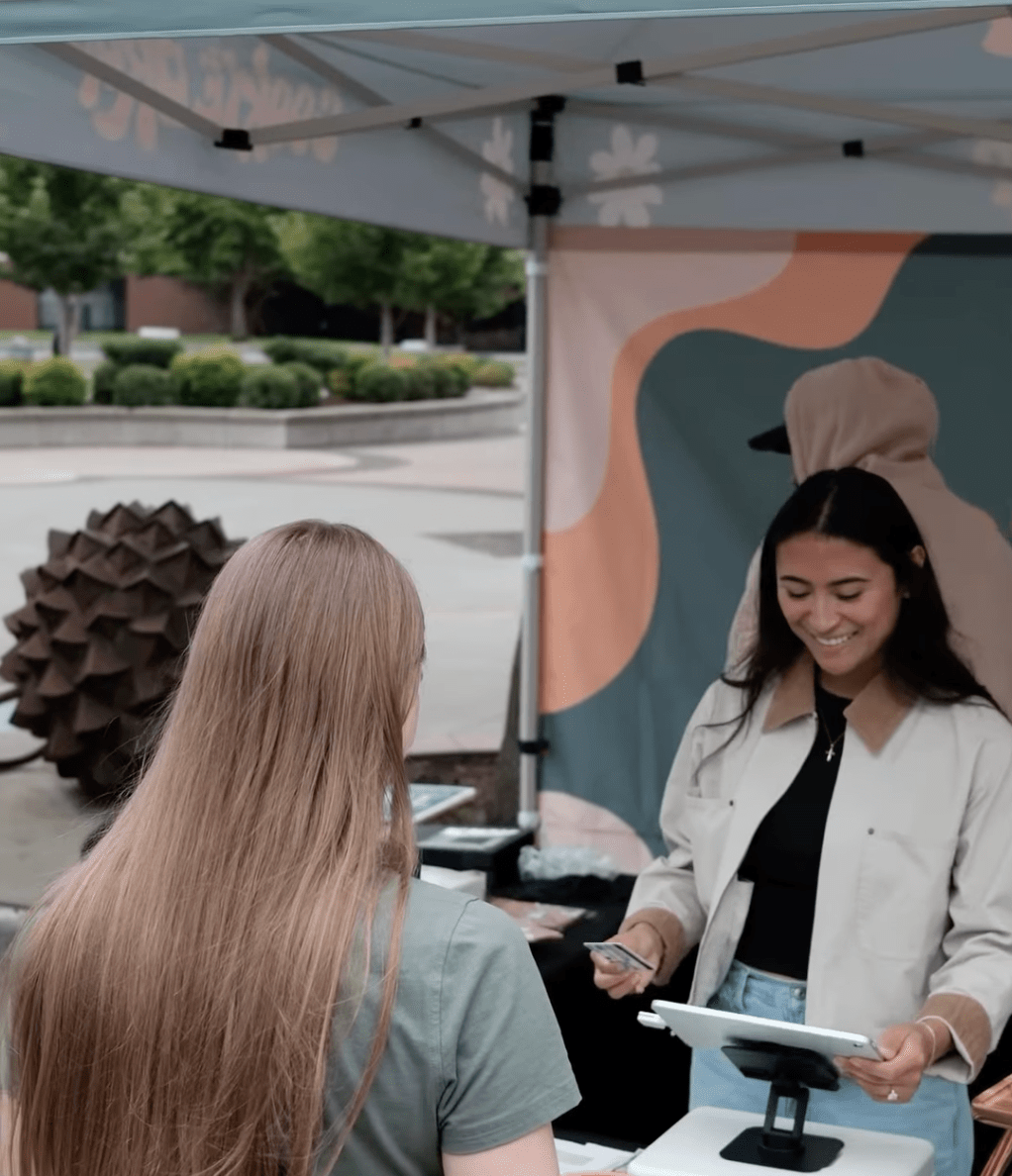
• Building recognizable branding at local markets and pop-ups
• Turning physical spaces into marketing assets rather than overhead
The goal is no longer just awareness. It’s recognition.
Because when consumers finally need a service, restaurant, retailer, or local provider, familiarity matters.
Businesses that stay visually present in their communities create a level of trust and recall that is difficult to replicate digitally.
As LookOurWay founder Nick Kusanovich explains: “Small businesses have always been resourceful. What we’re seeing now is a shift toward smarter visibility marketing—business owners investing in ways to stay memorable without constantly increasing ad spend.”
The shift is subtle, but important. Visibility is no longer being treated as a short-term campaign tactic. It’s becoming part of long-term business resilience.
As LookOurWay founder Nick Kusanovich explains:
“Small businesses have always been resourceful. What we’re seeing now is a shift toward smarter visibility—business owners investing in ways to stay memorable without constantly increasing ad spend.”
Small Businesses Are Prioritizing Marketing That Compounds
Economic pressure tends to expose inefficient systems quickly.
That includes marketing.
Many small businesses are becoming more selective about where they allocate resources, favoring strategies that:
• Generate repeated exposure
• Strengthen local brand familiarity
• Support both online and offline discovery
• Continue delivering value over time
This is one reason physical promotional assets and experiential marketing tools are seeing renewed interest across industries ranging from food service to home services to retail.
Unlike one-time digital impressions, physical visibility often compounds. A recognizable setup, storefront presence, branded event space, or recurring community activation can generate impressions continuously across weeks, months, or years.
For lean businesses, that efficiency matters.
Especially in a market where every dollar is scrutinized more closely than before.
How Small Businesses Can Stay Competitive in a High-Cost Economy
For many small businesses, growth in today’s economy is less about scaling fast and more about operating strategically.
That means focusing on marketing and operational decisions that create stability, visibility, and long-term customer value instead of short bursts of attention.
Some of the most effective small business growth strategies right now include:
Building Local Brand Recognition
Businesses that become visually recognizable within their communities create an advantage that larger competitors often struggle to replicate. Familiarity drives trust—and trust drives conversion.
Investing in Marketing That Lasts
Rather than relying entirely on short-term digital campaigns, many businesses are prioritizing visibility tools and experiential marketing efforts that continue generating impressions over time.
Diversifying Customer Acquisition
Businesses relying on a single platform or channel are more vulnerable to rising costs and algorithm shifts. Stronger brands are building multiple paths for discovery, both online and offline.
Creating Real-World Customer Experiences
Consumers increasingly remember businesses that create physical, memorable interactions. Whether through events, storefront visibility, community engagement, or experiential branding, businesses that feel tangible often stand out more in crowded markets.
Prioritizing Recognition Over Reach
Not every business needs to reach millions of people. Many simply need to become highly recognizable within the communities they serve. For small businesses, consistent visibility is often more valuable than viral exposure.
The Rise of Community-Centered Growth

Another notable shift is happening beneath the surface: small businesses are leaning harder into community-driven growth.
Consumers increasingly want businesses that feel tangible, local, and human. That’s creating opportunities for smaller brands willing to show up consistently in the real world.
According to recent consumer trend reporting from Deloitte, people continue placing greater value on experiences, authenticity, and connection when making purchasing decisions.
Small businesses are uniquely positioned to deliver that.
They can:
• Build local familiarity faster
• Create personal customer interactions
• Adapt quickly to changing market conditions
• Turn everyday visibility into trust-building moments
In many ways, the current environment is rewarding businesses that feel accessible and recognizable.
According to recent consumer trend reporting from Deloitte, people continue placing greater value on experiences, authenticity, and connection when making purchasing decisions.
The Small Business Growth Strategies Working in Today’s Economy
The strongest small business operators today are not relying on a single acquisition channel or waiting for economic conditions to “normalize.”
They’re adapting their playbook.
That often means:
• Diversifying how customers discover them
• Reducing dependence on volatile ad ecosystems
• Investing in visibility that lasts longer than a campaign cycle
• Building memorable brand presence within their communities
• Thinking beyond clicks and focusing on recognition
Importantly, this is not about abandoning digital marketing. The businesses seeing momentum are typically integrating both physical and digital strategies together.
Online builds awareness. Offline reinforces memory.
And in a crowded market, memorability has become one of the most valuable advantages a small business can have.
The Bigger Shift Happening Across Small Business
Periods of economic uncertainty tend to reshape how businesses operate.
What’s happening now appears to be a broader correction away from growth-at-all-costs thinking and toward sustainable visibility, stronger customer relationships, and more intentional brand building.
Small businesses are not simply trying to survive the current economy. Many are redefining how growth works within it.
The result is a quieter but more durable form of momentum:
• More community-driven
• More operationally disciplined
• More focused on long-term recognition over short-term reach
And for businesses willing to adapt, that shift may ultimately become an advantage.
Key Takeaways
• Small businesses are shifting from high-volume marketing to high-efficiency visibility.
• In a crowded digital landscape, being memorable in the real world has become a competitive advantage.
• Businesses are prioritizing marketing investments that continue generating exposure over time—not just short-term clicks.
• Community presence, local recognition, and authentic customer connection are becoming more valuable than polished digital reach alone.
• The strongest small businesses are diversifying how customers discover them instead of relying on a single acquisition channel.
• Physical marketing and experiential branding are re-emerging as practical tools for long-term visibility and customer recall.
• In today’s economy, the businesses gaining momentum are not always spending the most—they’re building the strongest presence.
See Our Success Stories
These visibility strategies are already working for local brands across retail, events, and activations.
Explore visibility marketing case studies →